
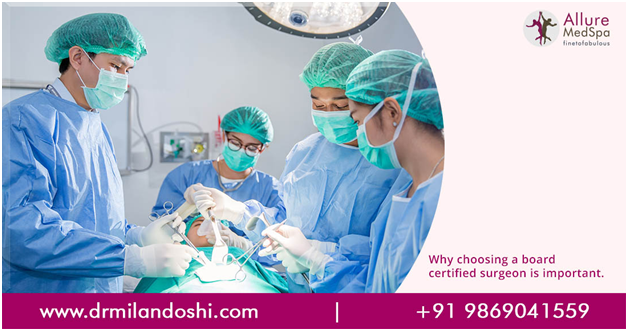

In my clinical experience, most cosmetic surgery disappointments do not happen because the procedure failed—they happen because the wrong surgeon was chosen. Cosmetic surgery, whether surgical or non-surgical, directly affects your health, appearance, and confidence. Cutting corners by choosing unqualified or non-certified doctors can lead to irreversible damage.
Let me explain clearly why board certification truly matters.
What does “board-certified” actually mean?
It means the surgeon has undergone structured, verified, and ethical training in cosmetic and plastic surgery.
Formal medical degree followed by years of surgical training
Dedicated plastic/cosmetic surgery residency
Rigorous examinations by recognised medical boards
Continuous evaluation and skill upgrades
Dr. Milan Doshi’s Tip:
Board certification is not a title—it is proof of accountability and competence.
Why is extensive training so important in cosmetic surgery?
Because cosmetic surgery combines medicine, precision, and aesthetics.
Minimum 5+ years of surgical training after medical school
In-depth understanding of anatomy and healing
Training in managing complications
Exposure to a wide variety of cases
A board-certified surgeon is trained not just to operate—but to anticipate, prevent, and manage risks.
Dr. Milan Doshi’s Tip:
Experience teaches judgment—and judgment saves patients.
How does board certification improve aesthetic outcomes?
Good cosmetic results require artistic vision backed by medical knowledge.
Ability to judge proportion and symmetry
Understanding what looks natural—not trendy
Customised planning for each patient
Avoidance of over-correction or artificial results
Dr. Milan Doshi’s Tip:
The best cosmetic surgery is invisible—it blends seamlessly with who you are.
Why does the surgical facility matter as much as the surgeon?
Because safety depends on both skill and infrastructure.
Board-certified surgeons typically operate in facilities that are:
Accredited and regulated
Equipped with emergency support
Staffed by trained anaesthetists and nurses
Compliant with ethical and legal medical standards
Dr. Milan Doshi’s Tip:
A skilled surgeon working in an unsafe setup is still a risk.
What are the risks of choosing a non-certified or “cheap” option?
Poor decisions often cost more—financially and emotionally.
Higher complication rates
Poor cosmetic outcomes
Need for corrective surgeries
Permanent scarring or deformity
Psychological distress
Dr. Milan Doshi’s Tip:
Correcting bad surgery is always harder than doing it right the first time.
Is board certification important even for minor procedures?
Yes. There is no such thing as a “small” cosmetic surgery.
Fillers, Botox, lasers also carry risks
Anatomy errors can cause long-term damage
A trained eye prevents complications
Dr. Milan Doshi’s Tip:
Skill matters most when something goes wrong—not when everything goes right.
How can patients verify a surgeon’s credentials?
A genuine surgeon will never hesitate to share their qualifications.
Ask about board certification
Check medical council registration
Review experience and case history
Ask where the procedure will be performed
Dr. Milan Doshi’s Tip:
Transparency is a hallmark of ethical medical practice.
Conclusion – Final Words from Dr. Milan Doshi
Cosmetic surgery is an investment in your body, confidence, and wellbeing. In my clinical experience, choosing a board-certified cosmetic surgeon is the single most important decision you will make—more important than cost, location, or convenience.
Remember this always:
Any cosmetic procedure is only as good as the surgeon who performs it.
Choose training over shortcuts, ethics over discounts, and experience over promises.