
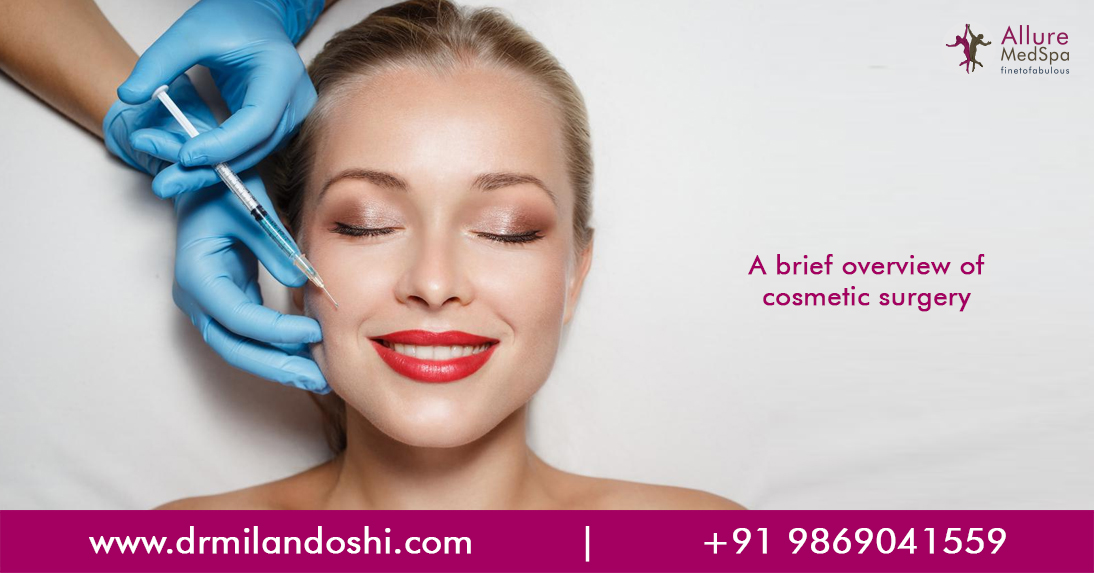

Many patients come to me curious yet cautious about cosmetic surgery. They want to look better, feel more confident, and address long-standing insecurities—but without risking safety or natural appearance. In my clinical experience, cosmetic surgery can be life-enhancing when done for the right reasons, by the right surgeon, with realistic expectations.
What exactly is cosmetic surgery meant to achieve?
Cosmetic surgery enhances appearance and confidence by correcting features that personally bother an individual.
Improves physical appearance
Reduces long-standing insecurities
Helps patients feel more confident
Supports emotional well-being
Dr. Milan Doshi’s Tip:
Cosmetic surgery is not about perfection—it is about comfort and confidence in your own body.
Is cosmetic surgery only surgical, or are there non-surgical options too?
Cosmetic surgery includes both surgical and non-surgical treatments depending on the concern.
Non-surgical: fillers, Botox, lasers, skin tightening
Surgical: rhinoplasty, liposuction, breast surgery, facelifts
Many procedures use very small, precise incisions
Minimal downtime with modern techniques
Dr. Milan Doshi’s Tip:
Most patients today choose non-surgical or minimally invasive options first.
Is cosmetic surgery safe with modern technology?
Yes, cosmetic surgery is safe when performed using modern technology by trained professionals.
Advanced equipment improves precision
Better anaesthesia and safety protocols
Faster recovery and natural results
Reduced discomfort compared to older methods
Dr. Milan Doshi’s Tip:
Safety comes from experience and planning—not just machines.
Are there disadvantages to cosmetic surgery?
Cosmetic surgery itself has no inherent disadvantage when done correctly.
Problems arise from:
Poorly trained surgeons
Inadequate facilities
Unsafe techniques
Choosing the wrong clinic increases risk
Dr. Milan Doshi’s Tip:
The surgeon and the setup matter more than the procedure itself.
Why is choosing the right surgeon so critical?
A qualified, board-certified surgeon ensures safety, ethics, and predictable outcomes.
Proper medical education
Years of hands-on experience
Understanding of aesthetics and anatomy
Ability to manage complications
Dr. Milan Doshi’s Tip:
You are not just choosing a procedure—you are choosing the hands that perform it.
How do expectations affect cosmetic surgery results?
Unrealistic expectations are the most common reason for dissatisfaction after surgery.
Surgery enhances—it does not transform identity
Results vary based on anatomy and healing
Clear goals lead to better satisfaction
Dr. Milan Doshi’s Tip:
When expectations are realistic, results are almost always rewarding.
Does cosmetic surgery improve self-confidence?
Yes. Many patients experience improved confidence and self-image after surgery.
Feeling comfortable in one’s appearance
Reduced self-consciousness
Better social and professional confidence
Positive emotional impact
Dr. Milan Doshi’s Tip:
Confidence after surgery comes from feeling like a better version of yourself.
Conclusion – Final Words from Dr. Milan Doshi
Cosmetic surgery is a powerful blend of science, skill, and psychology. In my clinical experience, it works best when chosen thoughtfully, performed ethically, and guided by realistic expectations. It is not a shortcut to happiness—but it can be a meaningful step toward confidence and self-acceptance.
When done for the right reasons, by the right surgeon, in the right setting, cosmetic surgery can safely help you feel more comfortable, confident, and proud of your appearance.